If the new moon is for planting, the full moon is for harvest. It is the bright, climactic peak of the lunar cycle, when the Moon is at its fullest and, traditionally, our feelings are too. It is a natural moment to pause, take stock, give thanks and let go.
Want tonight's exact moon phase?
Our free moon phase tool shows you exactly where the moon is right now, so you can match tonight's ritual to the real sky, not a guess.
Check tonight's moon phaseThe astrologer Yasmin Boland catches its spirit: "The Full Moon is a time of completion and release, making it the ideal moment to practice forgiveness." Whatever you believe about the Moon, that rhythm of completing and releasing is a useful one to keep.
What is a full moon?
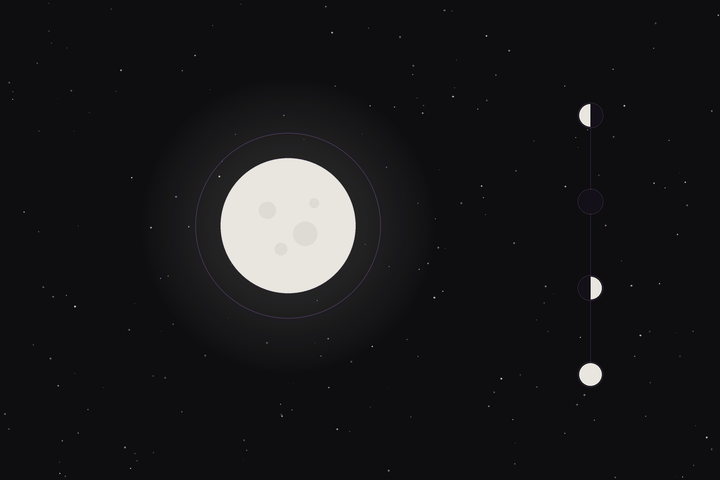
A full moon happens when the Earth sits between the Sun and the Moon, so the whole near side is lit. NASA puts it precisely: "The Moon is opposite the Sun, as viewed from Earth, revealing the Moon's dayside." It is the most visible, most luminous phase, which is part of why it has collected so much meaning over the centuries.
What the full moon is for
Where the new moon is about beginnings, the full moon is about culmination. It is a time to celebrate what has grown since the new moon, to feel gratitude, and to release what is no longer earning its place so you can travel lighter into the next cycle. Plenty of people also find their emotions run a little higher and brighter, which makes it a good night for honesty with yourself.
What to do on a full moon
None of this needs to be elaborate. Choose one or two practices that appeal.
Release what no longer serves you
Write down a worry, habit or belief you are ready to let go of, then safely tear it up or burn it in a heatproof bowl. The act is symbolic, a clear signal to yourself that you are setting it down.
Give thanks
Gratitude is the heart of full moon practice. Name what has gone well this cycle, out loud or on paper. A set of full moon affirmations is a lovely way to do it.
Charge your crystals
Leave your crystals on a windowsill or outside overnight to bathe in the moonlight. Moonlight is gentle and safe for every stone, unlike water, which can wreck softer crystals. Our guide to cleansing and charging crystals has the full method.
Make moon water
Leave a clean jar of water out under the full moon, set an intention over it, and use it the next day as a small ritual cue: to water a plant, mist your space, or just sip with awareness. The water holds no magic; the intention you bring to it is the point.
Say a prayer or sit in stillness
The full moon suits quiet reflection rather than busy planning. A full moon prayer, a short meditation, or simply gazing at the moon for a few minutes all fit the mood.
Rest and soften
A warm bath, an early night, a candle and a cup of tea. The full moon is a perfectly good excuse to slow down and look after yourself.
When to do it
You have a window. The full moon's energy is usually felt across about three days: the day before, the day of and the day after. Any of those evenings works beautifully.
What to avoid on a full moon
The full moon is a high, emotional tide, so tradition treats it as a time to be gentle with yourself. Many people avoid starting brand new projects, since the waning days ahead favour release rather than launching, and hold off on big impulsive decisions made on a surge of feeling. Above all, do not push through exhaustion: rest is part of the work, not a reward for finishing it.
When is the next full moon?
The full moon comes about once a month, when the Moon sits opposite the Sun and is fully lit. Its energy is felt most strongly on the night of peak fullness and the night before, and lingers for a day or two either side. To see the current phase and the date of the next full moon, visit our moon phase today tool.
Does the full moon really affect you?
Here is the honest part. Despite the stubborn belief that the full moon stirs up sleep, moods and even hospital visits, the research does not back it up. A large review reported by ScienceDaily found no reliable link between the lunar cycle and behaviour, and the Cleveland Clinic agrees. So the value of a full moon practice is not lunar power. It is the ritual itself. Research on ritual, such as the study "Rituals decrease the neural response to performance failure," shows that simple, deliberate rituals can genuinely lower anxiety and steady us. The full moon just hands that ritual a regular, beautiful night in the calendar.
I do not need the moon to be magic for a full moon evening to do me good. Lighting a candle, writing down what I am grateful for and what I am ready to release has become one of my favourite ways to close a month.
Keep exploring the moon
Balance your full moon practice with the new moon ritual, deepen it with full moon affirmations and a full moon prayer, or try a gentle full moon self love ritual.
Keep Exploring
Frequently asked questions
The full moon suits release, gratitude and recharging. Common practices include writing down and letting go of what no longer serves you, giving thanks, charging crystals in the moonlight, making moon water, saying a prayer or simply resting.
Culmination and release. It is a time to celebrate what has grown since the new moon, feel gratitude, and let go of habits or worries so you travel lighter into the next cycle.
Intentions are traditionally set at the new moon. The full moon is better for gratitude and release. If you set anything, frame it as celebrating and letting go rather than planting something new.
Leave them on a windowsill or outside overnight in the moonlight. Moonlight is safe for every stone, unlike water, which can damage softer crystals.
The research finds no reliable link between the lunar cycle and mood, sleep or behaviour. The benefit of a full moon practice comes from the calming ritual, not from the Moon itself.